 Owen Wallingford
Picture the inside of your fridge. Look at what’s on the shelves, inside the door, and in the drawers. I’d wager you found strawberries somewhere in there; after all, they are the most consumed berry in the United States, being found in 94% of households.
Unfortunately, pathogens don’t care about popularity, as strawberries are very vulnerable to fungal and bacterial infections due to their thin skin and proximity to the soil. The most virulent and deadly (to strawberries) of these pathogens is Neopestalotiopsis, which, lucky for us, is often shortened to Neopest.
Efforts to breed a strain of strawberry resistant to the Neopest fungus have been ongoing since it was first identified in 2014, but Kentucky based research has only started recently, as the fungus wasn’t found here until 2024.
Ella Shields, a senior horticulture major in the Martin-Gatton College of Agriculture, Food, and Environment, is one such Kentucky based Neopest researcher.
As a horticulture major, Ella is interested in all kinds of produce, but strawberries caught her attention when she found that only a handful of local researchers were working with them, despite the troubling discovery of Neopest in Kentucky.
A field infected with Neopest can yield nearly 50% less fruit, depending on the strain of strawberry, and because it is so virulent, it is typically only a matter of time before it infects the entirety of a farm’s strawberry population.
Ella applied for the 2026 Summer Sustainability Research Fellowship, provided by the Office of Undergraduate Research and the Student Sustainability Council, with a research proposal centered on breeding a Neopest resistant strain of strawberry, and it struck home.
Ella was one of six fellowship recipients, and the funding from it has been instrumental in allowing her to get the resources she needs, including the multitude of different varieties of strawberry she is working with.
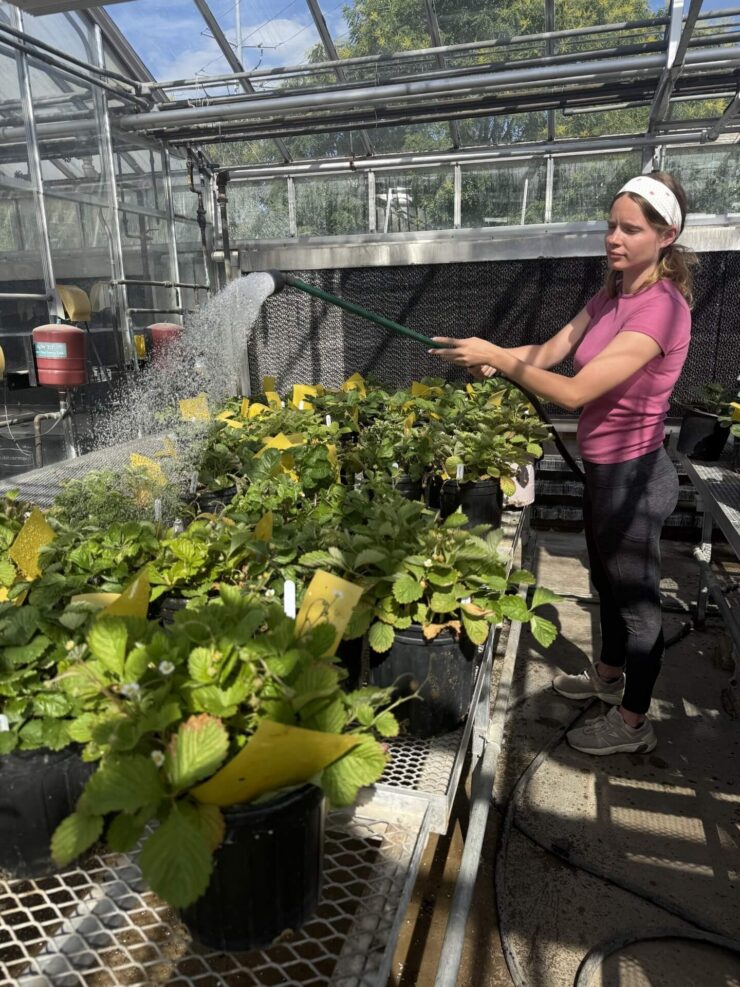
“I currently have 20 different varieties [of strawberries], and all of them have been inoculated with Neopest,” Ella said. “I haven’t found a variety resistant to it yet, but I have found one that is very susceptible to it. It may sound bad, but it’s actually really nice because it can serve as a baseline for all the others.”
Different varieties of strawberries have different traits. Some have larger fruits, others a specific shape or color, and others still may be resistant to a particular disease; however, the resistance of a strain to a specific pathogen isn’t uniform.
Finding a variety extra susceptible to Neopest is such a big deal because it lets Ella compare the other strains’ resistance to the fungus against the one she knows will be killed by it, and by crossbreeding them, Ella hopes to create a strain that is able to hold its own against Neopest, while still tasting amazing.
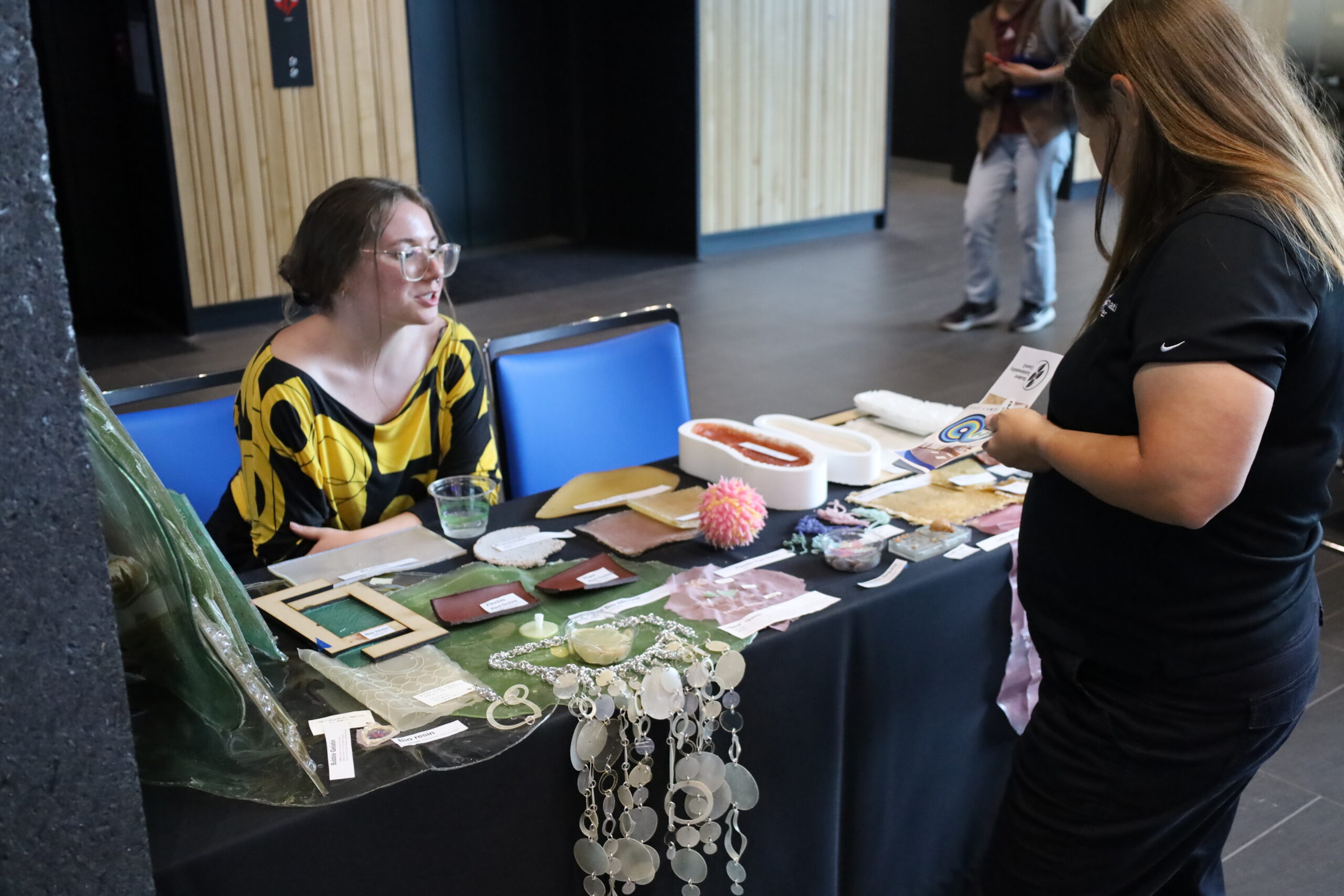
Ella’s research has progressed incredibly, winning second place at the Sustainability Showcase last month, and she plans to continue her pursuit of a Neopest resistant strawberry as she heads into graduate school. .
“[My research] has taught me so many helpful skills for grad school. I’ve learned how to identify susceptible lines, inoculate plants, and plan ahead for future trials. I’m really excited to see how it continues.”